
Varicose Veins: They Told Me I'd inherit them....I'm 47 and I Don't Have Any.....Let's Chat
Jul 09, 2026
When I was a little girl, I remember looking at my mom's legs and my grandmother's legs and seeing those raised, ropey, bluish veins winding up their calves. I was a curious kid, so I asked what they were.
The answer I got has stuck with me my whole life: "Those are varicose veins. They're genetic. You'll get them too when you're older."
Not "you might." Not "watch out for these habits." Just a flat inevitability, handed to me like a family heirloom I hadn't asked for.
Well, here I am at 47. And I don't have them.
I'm definitely not writing this to brag about my legs. I'm writing it because that childhood moment is a perfect little snapshot of everything I teach: the idea that your genes are a life sentence, that you're just waiting for the clock to run out on the "good" version of your body. I don't believe that. I've never believed that, and my legs are one small piece of evidence for why.
So let's talk about what I've actually been doing for many years, why it likely matters, and then let's get honest about the question everyone asked me after yesterday's reel: once these things show up, can you reverse them?
Keep reading for the full article & to understand varicose veins from the lens of light & water.
JULY specials: MyCircadianApp (30% off your first year this month only with code SARAHK)
WAITLIST OPEN! August will be here before you know it & we are currently registering for our waitlist for live coaching. CLICK HERE to get to the top of the list!
New here? Click here for my Free Product Guide & Click here for my favorite hair products
First, what varicose veins actually are:
Before we get to the light and the water and the minerals, you need the mechanism, because it's the whole key to understanding what you can and can't change.
The veins in your legs have a hard job. They have to move blood up, against gravity, back toward your heart. They do this with a series of tiny one-way valves, little doors that snap shut so blood can't fall back down between beats. Your calf muscles act as the pump, squeezing those veins with every step and pushing blood upward.
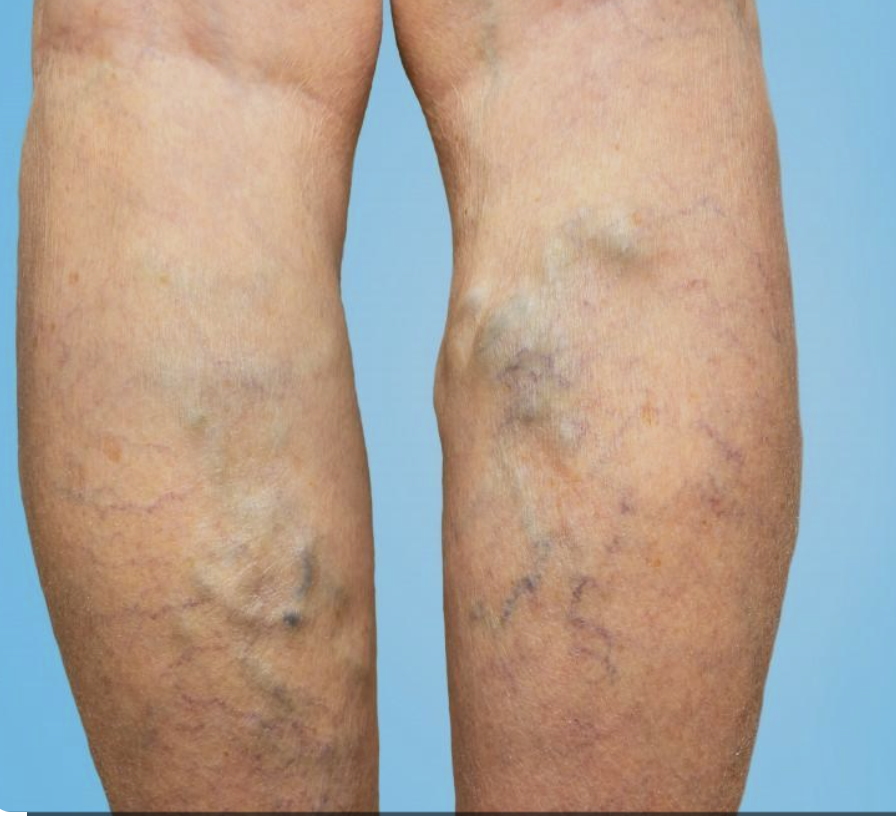
A varicose vein is what happens when that system starts to fail. The valves weaken and stop sealing. Blood pools and falls backward. Pressure builds up inside the vein. And over time that pressure stretches the vein wall until it bulges, twists, and rises to the surface as the rope you can see.
Now, the conventional world stops the story right there. To them, a vein is basically plumbing: a floppy tube with a broken door. Fix the door or rip out the pipe, done.
But that model is missing something huge, and it's the whole reason I don't think of these as a done deal. It's treating the vein like a dead pipe instead of the living, water-lined, charged tissue it actually is. More on that in a minute, because it changes everything about the reversibility question.
The conventionally named drivers are: genetics, hormones (estrogen and progesterone both relax vein walls, which is why pregnancy and perimenopause are such flashpoints), prolonged standing or sitting, and age.
But two of the biggest drivers almost never make the conventional list, and they're the two most in your control:
- Chronic dehydration. When you're consistently under-hydrated, your plasma volume drops and your blood gets thicker and more viscous. Thicker blood flows more sluggishly and pools more easily, which is exactly the stagnation that stretches vein walls and stresses those valves over time. Sluggish, pooling blood is the enemy here, and dehydration quietly feeds it.
- Mineral and connective-tissue deficits. Your vein walls are held together by crosslinked collagen and elastin, and that crosslinking depends on minerals, copper and vitamin C especially. Run low on the raw materials for years and the walls that are supposed to stay tight and springy get weak and stretchy instead. Magnesium status affects how well the vascular muscle holds its tone, and your sodium-potassium balance governs how much fluid your tissues retain and pool. A vein wall that fails isn't random. It's very often a slow mineral and connective-tissue story playing out underneath.
Notice how many of these are terrain, not fate. Hydration, minerals, movement, and the light and charge your tissues get? Those are the levers, and they're the same levers I'll show you I've been pulling for years.
The light and energy angle: what I actually do
Here's where my daily habits come in, and none of this is a magic cure. Think of it as years of supporting the terrain that keeps veins strong and blood moving.
Sunlight and UV: it's not just vitamin D
When UVA light hits your skin, it releases stored nitric oxide from the skin into your circulation. Nitric oxide is a vasodilator, it relaxes and opens blood vessels, and it's central to the health of the endothelium, the delicate lining of every vessel you have. This effect is completely independent of vitamin D. It's a circulation story, not just a bone story.
I've been getting intentional sun on my skin for years. Morning light first, then sensible midday exposure built up slowly and respectfully. I genuinely believe this daily nitric oxide signaling is part of why my vascular system has aged the way it has.
Watch my free safe sun exposure webinar here to get started today
Red and near-infrared light
Red and near-infrared light penetrate into tissue and get absorbed by cytochrome c oxidase inside your mitochondria. That boosts ATP production and, again, nitric oxide release. Better mitochondrial function and better nitric oxide signaling mean better microcirculation and healthier vessel walls and smooth muscle.
There's another layer here that matters for what comes next: infrared light is one of the things that helps your cells build structured water.
The direct research on red light and varicose veins specifically is still thin, so I'm not going to overpromise. But the underlying mechanism, supporting the energy and circulation of the vessel wall itself, is exactly the kind of foundational terrain work I build everything around.
Click here for my red light therapy protocols (included in my PROTOCOLS)
Grounding
Some studies suggest grounding can reduce blood viscosity and improve the way red blood cells repel each other, so blood flows more freely instead of clumping and sludging. For sluggish, pooling venous blood, that's a genuinely interesting mechanism. I ground because it costs me nothing and the direction of the evidence is encouraging, not because I think it's a cure. (you can get all my grounding protocols & ways to ground indoors without a grounding mat - inside of PROTOCOLS)
Cold water and cold plunging
I love cold, and if you are new here - you might not know that I actually used it to improve my fertility (yes - that's what I said lol)
Beyond how it helped me get pregnant with my now 3 year old - there's a real vascular logic to it. Cold makes your blood vessels constrict, they tighten and clamp down, and then as you warm back up they open again. That constrict-then-dilate cycle is like a tone workout for your vessels, and it can give real relief from that heavy, swollen, pooled feeling in the legs by encouraging blood to move back up and out instead of sitting there.
Here's my honest boundary on it: I personally use cold for vascular tone and for how much lighter my legs feel afterward, not because I think a cold plunge dissolves a varicose vein. The evidence is much stronger for circulation support and symptom relief than for prevention or reversal. And a real caution, cold plunging can be a genuine cardiovascular stressor. If you have any heart condition or blood pressure issues, this is a talk-to-someone-first tool, not a jump-in-blind one. Even a cold rinse at the end of a shower or cold water on the legs gives you a gentler version of the same effect.
(I have cold therapy protocols inside of PROTOCOLS if you want to get started today)
Vibration plates
This one is one of my favorites for a simple reason: the calf muscle is the pump, and a vibration plate makes that pump fire. Whole-body vibration triggers rapid muscle contractions, including in your calves, and every one of those contractions squeezes your leg veins and helps push pooled blood upward and out. If you sit a lot, or you physically can't be on your feet walking as much as you'd like, a few minutes on a plate is a way to run the venous pump without a long walk.
This is the one I personally use.
The honest take, same as everything else here: this is circulation and pump support, not a proven cure for veins that have already turned. And if you already have significant vein disease, run it by someone who knows your legs before you start bouncing. But as a daily "keep the blood moving" tool, especially for the desk-bound, it fits beautifully.
Hydration and structured water
Dehydrated blood is thicker, flows worse, and pools more easily. Proper hydration supports healthy plasma volume and viscosity, which is the most basic circulation lever there is. On top of that baseline, I care about the quality and structure of the water I drink and the structured, exclusion-zone water my cells can build when they're well-mineralized and getting light. Hydration isn't just ounces in a glass. It's whether that water actually gets into your cells, lines your vessels, and moves.
Click here for my free article on hydration & everything I use
Mineral support: the piece almost nobody talks about
Remember the mineral and connective-tissue deficits I named as a root driver up top? This is the other side of that coin, the fix for the cause. Minerals are the most underrated lever for vein integrity because they're literally the raw material your vein walls are built and run on.
- Magnesium relaxes vascular smooth muscle and supports healthy vessel tone.
- Copper is essential for lysyl oxidase, the enzyme that crosslinks elastin and collagen. That crosslinking is the strength of your vein walls and valves. Weak, stretchy vein walls are often a connective tissue story, and connective tissue runs on copper.
- Vitamin C drives the collagen synthesis behind that same wall strength.
- Potassium and sodium balance governs fluid retention and how much your tissues hold onto water and pool.
This is terrain over protocol in its purest form. A weak vein wall isn't random bad luck. It's very often a mineral and connective-tissue deficit playing out over years.
I have basic hydration protocols as a standalone here & also as a part of PROTOCOLS
And the unglamorous one: movement
I move all day, in small ways. Because none of the above overrides the calf-muscle pump. Sitting still or standing still for hours lets blood pool no matter how dialed your light and minerals are. Walking, morning light on my skin while I move, breaking up long sitting, that mechanical pump is doing work every single time your foot hits the ground.
What would Dr. Pollack say? The vein is not a dead pipe.
This is where I have to challenge the conventional story, and where Gerald Pollack's water science completely reframes the question.
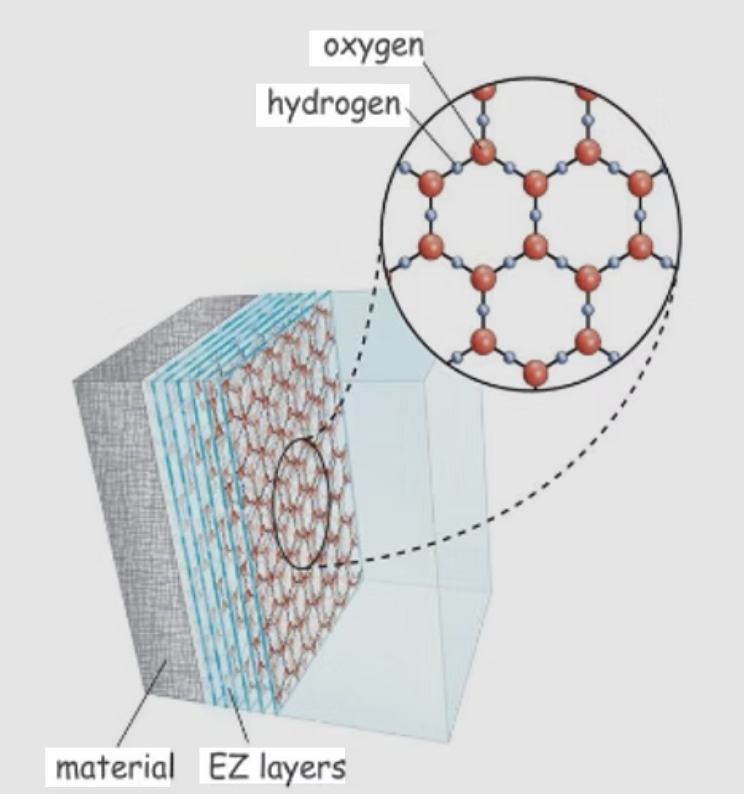
Pollack's work is about what he calls the fourth phase of water, or exclusion-zone water. When water sits against a water-loving surface, and the inside of your blood vessels is exactly that kind of surface, it organizes itself into a structured, gel-like, electrically charged layer. This isn't fringe hand-waving; it's water behaving differently against a living membrane than it does in a glass.
Inside your vessels, that structured layer lines the endothelium. It's part of what keeps blood flowing smoothly, keeps cells from sticking to the wall, keeps the whole surface charged so blood cells repel each other instead of clumping. Pollack has even argued this structured layer helps drive flow itself, taking load off the heart and the vessel wall.
So through his lens, a vein is not a passive tube with a broken door. It's a living, water-lined, charged system. And that completely changes how you think about what fails and what can heal.
When that structured layer degrades, from dehydration, from no light, from lost charge, from inflammation, the lining gets vulnerable, flow gets stickier and more turbulent, and the wall takes more and more punishment. That is a terrain contribution to why veins fail. Genetics and gravity are only part of it.
And here's the hopeful part: that structured, charged layer is buildable. It responds to infrared light. It responds to grounding and charge. It responds to cold's push on circulation. It responds to real, mineral-rich hydration. Which means the functional environment inside your vessels, the thing that determines flow quality and whether things get better or worse, is not fixed. It's alive, and it's responsive to exactly the daily practices I've been describing.
Pollack would say the conventional model is describing the corpse of the vein and ignoring the water that makes it alive.
This is a staged condition, and stage changes everything
Before I answer the reversibility question, you need this piece, because the honest answer is completely different depending on where someone is.
Vein disease lives on a spectrum. Roughly, it runs like this:
- The earliest signs: spider veins, fine reticular veins, and that heavy, achy, swollen-at-the-end-of-the-day feeling with nothing much visible yet.
- The middle: visible, raised varicose veins, the ropey ones, often with real aching, throbbing, and swelling.
- The advanced end: persistent swelling, skin changes and discoloration around the ankles, and at the severe end, skin breakdown and venous ulcers.
Why does this matter so much? Because the earlier the stage, the more your terrain runs the show, and the more responsive it is. Early changes have a lot of give in them. The advanced end involves real, entrenched tissue damage and needs proper medical care, not just better habits. Terrain work still supports someone at the advanced end, it's just no longer the whole answer, and pretending otherwise would be doing you a disservice.
So when someone asks "can I reverse mine," the real question underneath is "where am I on this spectrum." Keep that in mind as you read the next part.
So are they reversible? The honest answer.
This is the question I got over and over, and I'm not going to give you a feel-good non-answer. Here's the honest, layered truth.
Once a vein has become a big, advanced, rope-like bulge, that particular vein is unlikely to shrink all the way back to invisible on its own. A wall that's been stretched and twisted over years, with valves that have given out, has real physical change to it. When mainstream medicine talks about "reversing" one of those, they mean closing it off or removing it. I'm not going to tell you light and water will make a severe, established varicose vein vanish, because I'd be lying to you, and some of you would skip care you actually need.
But that is where the conventional story ends and mine keeps going, because reversibility is not one yes-or-no switch. It's a spectrum, the same spectrum as the stages above.
- The vein's inner terrain, its structured-water lining, its charge, its flow quality, its endothelial health, is dynamic and restorable. This is the Pollack piece. You can absolutely improve the living environment inside the vessel, and that changes how it functions and whether it keeps degrading, at every stage.
- Early-stage changes - spider veins, mild reticular veins, that heavy achy pooling feeling, the very beginning of bulging — can genuinely calm down, improve, and partially regress when you rebuild the terrain. This is where the wins are biggest.
- Established veins, even when the bulge itself stays, can have their progression halted and their symptoms dramatically reduced. Slowing and stopping the worsening is a real, meaningful win.
- And whether you develop them at all is not sealed by your DNA. Genetics loads the gun. Terrain pulls the trigger.
That last point is my whole life's message, and my own legs are my Exhibit A. I inherited the predisposition. I was told I'd inherited the outcome. But the outcome depends on hormones, movement, minerals, hydration, light, charge, and the living water inside my vessels, and those are the things I've been tending to for years.
Genetics was real.....Inevitability was a story.
One important safety note
If you ever get sudden swelling, warmth, redness, or pain in one leg, that is not a lifestyle-tweak situation. That can be a blood clot, and it needs a real medical evaluation right away. Same goes for any skin breakdown, open sores, or ulcers around the ankles, that's the advanced end of the spectrum and it needs real care alongside anything you do at home. I will always tell you the truth, and the truth is that some leg symptoms are urgent. Please treat them that way.
Where to go from here:
If this resonated and you want to actually build the terrain I'm describing, here's where I'd point you:
- THE PROTOCOLS hydration - red light - grounding + 20 other protocols I use with clients and students every single day.
- [Safe Sun Exposure Webinar - free for everyone] - my complete approach to building sun exposure that supports you instead of burning you, including the nitric oxide story.
- [Personalized Coaching Waitlist] - if you want your own structured, bio-individual protocol built around your terrain, your hormones, your stage, and your goals, get on the waitlist here. We start at the end of August - which will be here before you know it!
You are not waiting around for a genetic sentence to be carried out. You're building a body. Let's build a good one together!
As always, this is education, not medical advice. Work with someone who knows your full picture before making changes, especially if you already have vein disease or any clotting risk.
Be notified of new events as soon as they are open & get special discounts for being a subscriber.
Unlock 10% Off Any Product In My Store*
*excluding the Sarah Kleiner Wellness Membership and my Course Bundle
We hate SPAM. We will never sell your information, for any reason.
